Browser games you can play without downloading anything (2026)
The promise of a browser game is the same one arcade cabinets used to keep: drop a coin, play the game, leave when you’re done. No installer, no launcher, no patch day, no 30 GB on the SSD. Click the thumbnail and the game is already running.
Every title on Kloopik is HTML5 or WebGL, runs natively in any modern browser, and needs zero plug-ins — no Flash, no app store, no account wall. Browse the full list of free browser games for the whole catalog. The eight picks below are deliberately cross-genre: fast to load, fast to understand, immediately playable, but each one asks something different. That variety is the point — the no-download promise is only useful if there’s something for every mood on the other side of the click.
1. JiggleSaw
JiggleSaw teaches itself in about ten seconds — drag a piece, drop it near its slot, it snaps. The rules are visible the moment the board appears. What makes it worth opening is the physics layer: pieces bounce when you grab them and settle with spring motion when you let go. Four difficulty tiers sit on top of that, including a rotation mode that forces you to orient pieces as well as place them — roughly quadrupling the search space. Cute pastel art, real puzzle structure.
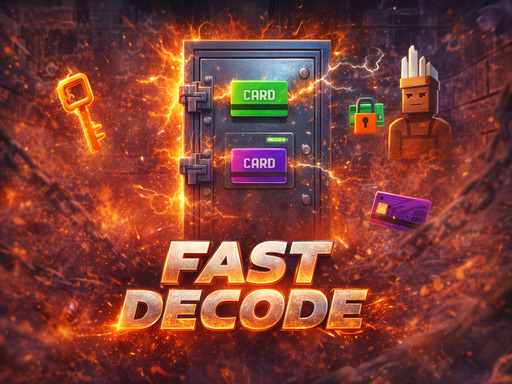
2. Fast Decode
Fast Decode is a timed escape-room puzzler — you enter a room, a clock starts, and you have to read the mechanism (combination dial, wire panel, sliding tile lock) and operate it in the right order before the timer runs out. Comprehension is instant because the puzzle interface is always on screen, no menus to dig through. The skill is observation under pressure: a single misordered click resets the mechanism and burns seconds. Later rooms layer two mechanisms together, so the cognitive load climbs faster than the clock.
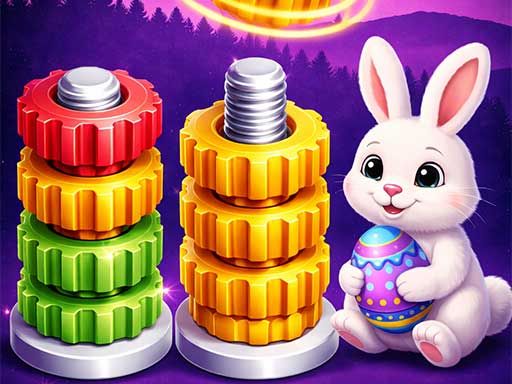
3. Sorting Nuts Puzzle Game
Sorting Nuts is the color-sort genre at its most disciplined. The goal is obvious from frame one — end with each bolt holding a single color. The mechanic that makes it interesting takes one tap to discover: you can only move the top nut, and only onto an empty bolt or a matching color. Capacity is so tight in later levels that the actual puzzle is the move order, not the color matching. Soft-lock and restart is part of the loop, not a punishment.
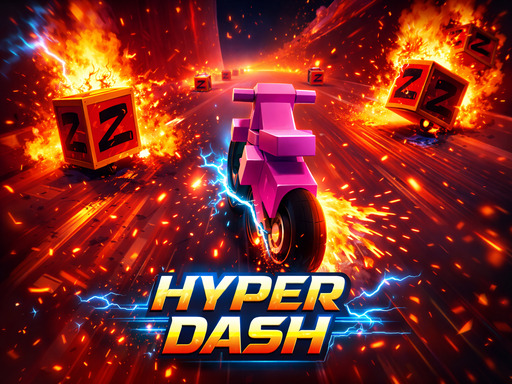
4. Hyber Dash
Hyber Dash strips driving to its smallest verb: click left or right to switch lanes and dodge oncoming obstacles. You learn the entire game in one screen — three or four lanes, automatic acceleration, no UI to read. What earns the screen time is the rising speed: the lane-shift animation takes about a quarter-second, and at top speed that’s half a screen, so you have to decide which lane to be in two obstacles ahead. Score is distance, and that’s enough.
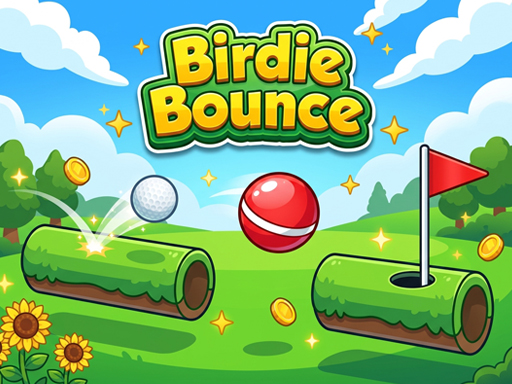
5. Birdie Bounce
Birdie Bounce is arcade golf with the swing collapsed to one input — hold to charge, drag to aim, release to shoot. Fifty holes across five themed courses (seaside, jungle, outer space among them), with the ball bouncing across platforms and pipes rather than rolling along greens. The premise is legible in five seconds, but the meta rewards consistent par over one lucky bounce: shot counts compound across a course, and the par-or-better star bonus gives every hole a ceiling worth replaying.
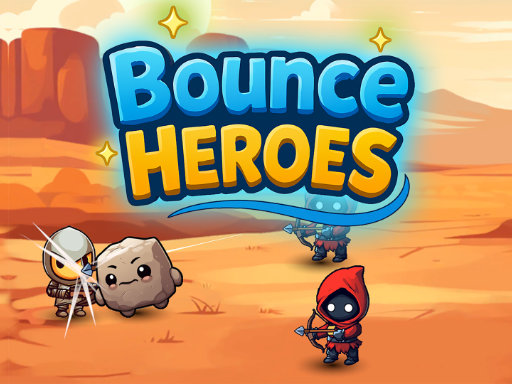
6. Bounce Heroes
Bounce Heroes is the densest game on the list and still loads in seconds. Three loops stack — an idle RPG fighting enemies in the background, a merge puzzle where the balls you launch combine when they touch, and a roguelite card pick between waves. The hook is the layer-dig: enemies stack vertically, and merged balls punch through layers to reveal loot and tougher foes underneath. Aim for walls instead of enemies to chain bounces, and commit to one card theme rather than spreading upgrades.
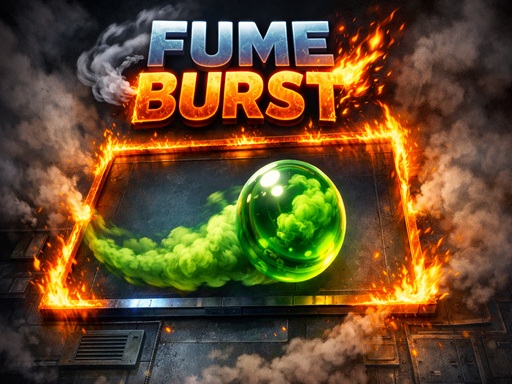
7. FumeBurst
FumeBurst is the cleanest physics game here. A gas-filled ball drifts around an arena, you tap on the open side to nudge it away from danger, and one wall collision ends the run. No shooting, no shielding, no second life — the entire game is reading momentum and correcting early. Tap before the ball reaches the wall, and aim your impulses to redirect rather than just repel. The arena tightens as you survive, so the skill scales without changing the rules.
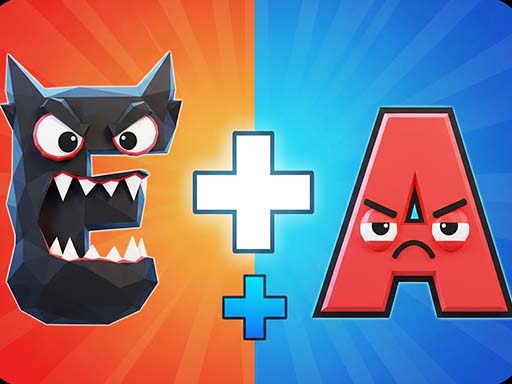
8. Alphabet Merge Challenge
Alphabet Merge Challenge bolts a merge puzzle to an arena auto-battler. Combat resolves on its own; your job is the board on top, where you drag identical letter tiles together to upgrade them up the alphabet. The coupling is real — the tiles you keep alive are the ones doing damage — and merges scale exponentially, so an A-into-B chain late in a wave can flip a losing run. Push one tile as deep as you can rather than spreading merges, and save your top letter for the Rainbow Monster boss.
What to play next
- Quick games for short breaks — the same no-friction premise, narrowed to titles that fit a five-to-ten minute window.
- Best puzzle browser games — the puzzle shelf in detail, with logic puzzles, merges, and block boards.
- Browse the full catalog — every published game on Kloopik, sorted with editorial picks pinned to the top.